
Commercial Loans
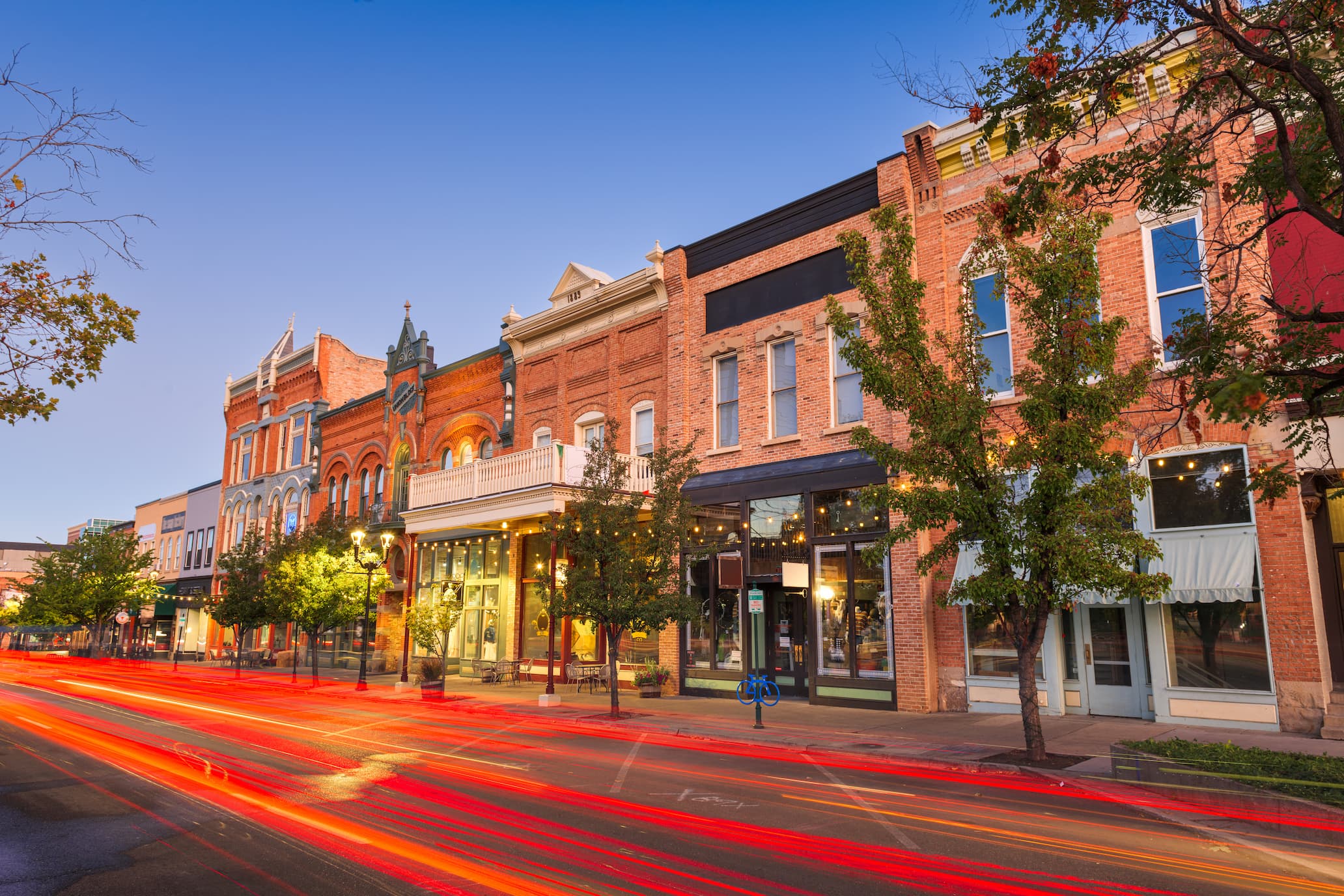
Commercial real estate financing is not a single product — it is a spectrum of programs with different eligibility requirements, leverage parameters, and execution timelines. Agency debt offers the best pricing for stabilized assets that meet program guidelines. CMBS provides flexibility for borrowers and properties outside conventional boxes. Life company financing suits institutional-quality assets in established markets. SBA programs serve owner-operators acquiring or building their own facilities. Debt fund capital fills the gap for transitional assets and complex situations. We identify where your deal fits before recommending a path forward.
Commercial
Freddie Mac SBL
The Freddie Mac Small Balance Loan program is designed for stabilized conventional multifamily properties in the $1M to $7.5M range. It is the right program for borrowers who own or are acquiring a performing apartment property and want non-recourse agency debt with competitive fixed or hybrid rates.
This program is particularly well-suited to experienced operators who want to lock in long-term financing without personal liability exposure. The rate is fixed at LOI execution, which eliminates rate risk during the closing process. Amortization runs 30 years with interest-only options available, and prepayment flexibility is built in through multiple stepdown structures.
Market classification drives both DSCR requirements and maximum leverage — top and standard markets allow up to 80% LTV while small and very small markets step down to 75% or 70% on refinance. If your property is in a secondary or tertiary market, that classification will be the key underwriting variable.
This is agency paper — non-recourse with standard carve-outs, competitive pricing, and a straightforward closing process for a well-prepared borrower.
Criteria
- Loan Purpose- Acquisition, refinance, recapitalization
- Loan Amount - $1M–$7.5M (larger for portfolios)
- Loan Term - 5, 7, 10-year fixed; 5/7/10 hybrid options
- Rate Type - Fixed or fixed-to-floating; locked at LOI
- Closing Timeline - 45–60 business days
- Fees - up to 1%
- Min DSCR - 1.20x Top Market / 1.25x Standard / 1.30x Small / 1.40x Very Small
- Amortization - 30 years; partial or full-term IO available
- Max LTV - 80% Top & Standard / 75% Small / 70% Small Refi
- Escrows - RE taxes if LTV >65%; reserves if >50 units
- Recourse - Non-recourse with standard carve-outs
- Prepayment - Multiple stepdown options available
- Legal Fees - Generally $7,500 or less per loan
- Markets Nationwide excluding NV, ND, SD
Affordable Housing
The Affordable Housing program serves developers and owners working with income-restricted properties — specifically those involving Low Income Housing Tax Credits, tax-exempt bond financing, rehabilitation projects, or bridge-to-bond transactions.
This is not a conventional multifamily program. It is structured for the complexity of affordable deals: longer amortization, higher leverage, and a closing process designed to accommodate the layered capital structures common in LIHTC transactions. Maximum LTV reaches 90%, amortization extends to 40–45 years, and the minimum DSCR of 1.15x reflects the income constraints inherent in restricted-rent properties.
Recourse structure transitions with the deal — recourse through stabilization, non-recourse thereafter with standard carve-outs. That structure is appropriate for construction and rehabilitation projects where lender risk is elevated during the build or lease-up phase.
This program is best suited for experienced affordable housing developers, mission-driven operators, and sponsors with LIHTC equity in the capital stack. If you are working on a new construction affordable deal, a rehabilitation, or a bond transaction, this is the right starting point.
Criteria
- Loan Purpose- Acquisition, rehabilitation, new construction, bridge-to-bond, LIHTC
- Loan Amount - $3M–$100M+
- Loan Term - 5–17 years
- Max LTV - 90%
- Closing Timeline - 45–60 days from term sheet
- Fees - 1.00–2.00%
- Min DSCR - 1.15x
- Amortization - 40–45 years
- Recourse - Recourse through stabilization; non-recourse thereafter
- Markets - Nationwide excluding NV, ND, SD
CMBS
CMBS financing is the right structure for multifamily borrowers who need flexibility that agency programs don't provide — non-institutional assets, borrowers with credit complexity, or deals that fall outside conventional underwriting boxes.
The program is fully non-recourse with standard bad boy carve-outs, loans are assumable, and cash-out refinancing is available. CMBS will consider non-Class A assets and applies less borrower scrutiny than agency execution, which makes it a viable path for experienced operators who own quality assets but don't fit a clean agency profile.
Rate is fixed — starting at 200 basis points over the relative swap rate — and the program accommodates loan sizes from $2M upward across multifamily, industrial, retail, self-storage, student housing, hospitality, and manufactured housing. For larger transactions, CMBS can be combined with mezzanine debt or preferred equity to optimize leverage.
Prepayment is via defeasance or yield maintenance, which means this program is best suited for borrowers with a longer hold horizon who are not planning a near-term sale or refinance.
Criteria
- Loan Amount - $2M and up
- Loan Term - 5, 7, or 10-year fixed
- Interest Rate - Starting at 200 bps over swap rate
- Amortization - 25–30 years
- Max LTV - 75%
- Min DSCR - 1.25x
- Min Debt Yield- 8%
- Recourse - Non-recourse with standard carve-outs
- Reserves - Taxes, insurance, replacement reserve, leasing costs
- Prepayment - Defeasance or yield maintenance
- Assumability - Fully assumable
- Mezzanine / Pref Equity - Available in many scenarios
- Markets - Nationwide excluding NV, ND, SD
Life Company
Life company financing is best suited for quality stabilized assets in established markets — borrowers who prioritize competitive long-term fixed rates and a straightforward closing process over maximum leverage.
This program targets properties in metropolitan statistical areas of 250,000 or more with strong long-term growth fundamentals. Life company lenders are conservative underwriters — they want in-place cash flow, quality collateral, and borrowers with a clean story. What they offer in return is some of the most competitive fixed-rate pricing available in the market, no escrows for taxes or insurance, and an efficient 30–45 day closing timeline.
Loan sizes run from $1M to $15M with recourse and non-recourse options available depending on the deal. The prepayment structure is a standard stepdown — 4%, 4%, 3%, 2%, 1% over the first five years, then open at par — which means this program fits borrowers with a medium to long-term hold strategy who are not anticipating an early exit.
If you own a stabilized, well-located multifamily or commercial property and want institutional fixed-rate debt without agency complexity, life company is worth evaluating.
Criteria
- Loan Amount - $1M–$15M
- Loan Term - 5, 7, or 10-year
- Amortization - 25 or 30 years
- Rate Type - Competitive fixed rate
- Max LTV - 75%
- Min DSCR1.25x (trailing 12 months)
- Recourse - Recourse and non-recourse available
- Escrows - None for taxes or insurance
- Origination Fee - Up to 1%
- Application Fee - None
- Third Party Deposit - $15K–$20K required with signed LOI
- Prepayment - 4/4/3/2/1 stepdown; open at par after year 5
- Closing Timeline - 30–45 days
- MarketsNationwide MSAs 250K+ excluding NV, ND, SDLoan ServicingManhattanLife
CMBS
CMBS is the right structure for industrial property owners who need non-recourse financing and want flexibility that agency or bank programs don't provide. It accommodates a wide range of industrial property types — warehouse and distribution, flex, light manufacturing, cold storage, and data centers — and applies less borrower scrutiny than conventional institutional lenders.
Loans are fully assumable, cash-out refinancing is available, and the program will consider non-Class A assets in secondary markets. For investors who have built equity in an industrial property and want to access it, or who are expanding into a different industrial sector, CMBS provides a reliable execution path.
Triple-net leases are preferred and staggered lease structures are looked upon favorably. The program works best for stabilized assets with in-place cash flow and a borrower who has a medium to long-term hold horizon — prepayment is via defeasance or yield maintenance, so early exit is costly.
Criteria
- Loan Amount - $2M minimum, no maximum (within reason)
- Loan Term - 5, 7, or 10-year fixed
- Amortization - 25–30 years
- Interest Rate - Swap + 550 (directional; subject to market)
- Max LTV - 80%
- Min DSCR - 1.25–1.35x
- Recourse - Non-recourse with standard carve-outs
- Prepayment - Defeasance or yield maintenance
- Assumability- Fully assumable
- Preferred Lease Structure - Triple-net; staggered leases
- Property Types - Warehouse, distribution, flex, light manufacturing, cold storage, data centers
- Markets - Major markets preferred; nationwide excluding NV, ND, SD
Life Company
Life company financing is best suited for owners of stabilized, well-located light industrial and warehouse properties in metropolitan markets with strong long-term fundamentals. These lenders are conservative — they want quality collateral, in-place cash flow, and a clean borrower story. What they offer in return is some of the most competitive fixed-rate pricing available, no escrows for taxes or insurance, and an efficient closing process.
This program targets properties in MSAs of 250,000 or more. It is not a fit for transitional assets, value-add plays, or secondary market locations outside established growth corridors. If the asset is stabilized and the market is strong, life company debt is worth evaluating before defaulting to CMBS.
Loan sizes run $1M to $15M with both recourse and non-recourse options. The prepayment structure is a standard stepdown — open at par after year five — which suits borrowers with a medium to long-term hold strategy.
Criteria
- Loan Amount - $1M–$15M
- Loan Term - 5, 7, or 10-year
- Amortization - 25 or 30 years
- Rate Type - Competitive fixed rate
- Max LTV - 75%
- Min DSCR - 1.25x (trailing 12 months)
- Recourse - Recourse and non-recourse available
- Escrows - None for taxes or insurance
- Origination Fee - Up to 1%
- Third Party Deposit - $15K–$20K required with signed LOI
- Prepayment4/4/3/2/1 stepdown; open at par after year 5
- Closing Timeline - 30–45 days
- Property Types - Light industrial, warehouse, flex
- MarketsMSAs 250K+ nationwide excluding NV, ND, SD
USDA B&I
The USDA Business and Industry Guaranteed Loan program is a government-backed financing option specifically designed for businesses acquiring, constructing, or refinancing industrial real estate in rural areas. If your facility is located in a city or town with a population under 50,000, this program is worth serious consideration.
The USDA guarantees 60% to 80% of the loan amount, which allows participating lenders to extend financing in markets and situations that conventional programs often avoid. Eligible uses include purchasing, constructing, or improving warehouses, distribution centers, manufacturing plants, and other industrial facilities.
This program is particularly well-suited for owner-operators — businesses that occupy their own facility and are looking to acquire or expand rather than pure investors. It supports job creation and retention as a core program objective, so projects with a clear employment impact are viewed favorably. Minimum FICO of 600 applies and closing typically runs 45–60 days.
Criteria
- Loan Amount - $1M–$25M
- Loan TermUp to 30 years
- Max LTV - 80%
- Rate Type - Fixed or variable; negotiated with lender
- USDA Guarantee - 60%–80% of loan amount
- Min FICO - 600
- Equity Requirement - 20% minimum
- Eligible Uses - Acquisition, construction, improvement of industrial facilities
- Location Requirement - Rural areas; population 50,000 or less
- Eligible Borrowers - For-profit, non-profit, cooperatives, federally recognized tribes
- Closing Timeline - 45–60 days
- Job Requirement - Must create or retain jobs
- Markets - Eligible rural areas nationwide excluding NV, ND, SD
SBA Express
The SBA Express program is the fastest path to SBA-backed financing for owner-operators who need capital quickly. It is an expedited version of the standard SBA 7(a) program with a streamlined approval process and faster turnaround.
This program is designed for business owners who need financing for multiple purposes — real estate, equipment, working capital, or debt refinance — and want the flexibility to combine those needs into a single loan. It is not an investor program. The borrower must be an operating business occupying or acquiring the financed asset.
Loan amounts are capped at $500,000, which positions this program for smaller acquisitions, tenant improvements, or working capital needs rather than large facility purchases. If your financing need exceeds $500,000, the SBA 7(a) or SBA 504 programs are the appropriate next step.
Criteria
- Loan Amount - Up to $500,000
- Interest Rate - Fixed or variable; WSJ Prime plus margin
- Loan Term - Up to 10 years (non-real estate); up to 25 years (real estate)
- Down Payment - 10% minimum for startups and acquisitions
- Prepayment Penalty - 5/3/1% for loans with terms 15+ years
- Fees - SBA guaranty fee, service fee, bank closing costs (all financeable)
- Eligible Uses - Real estate, equipment, working capital, inventory, debt refinance, business acquisition
- Balloon Payment - None
- Markets - Nationwide excluding NV, ND, SD
SBA 7(a)
The SBA 7(a) is the core SBA lending program — flexible, affordable, and designed for operating businesses that need capital for real estate, equipment, working capital, or business acquisition. It is the right program for owner-operators who want longer repayment terms, lower down payment requirements, and competitive rates without the complexity of a 504 structure.
Loan amounts go up to $5,000,000, which covers a meaningful range of industrial facility acquisitions and improvements. The program accommodates multiple financing needs in a single loan — real estate, tenant improvements, equipment, and working capital can be combined, simplifying the process and reducing closing costs.
This is not an investor program. The borrower must be an operating business with a viable repayment story. For businesses that occupy their own industrial facility and are looking to acquire, expand, or refinance, the 7(a) is often the most straightforward path to long-term fixed-rate financing.
Criteria
- Loan Amount - Up to $5,000,000
- Interest Rate - Fixed or variable; WSJ Prime plus margin
- Loan Term - Up to 10 years (non-real estate); up to 25 years (real estate)
- Down Payment -10% minimum for startups and acquisitions
- Prepayment Penalty - 5/3/1% for loans with terms 15+ years
- Fees - SBA guaranty fee, service fee, bank closing costs (all financeable)
- Eligible Uses - Real estate, equipment, working capital, inventory, debt refinance, business acquisition, tenant improvements
- Balloon Payment - None
- Blended Maturity - Available for mixed-purpose loans
- Markets - Nationwide excluding NV, ND, SD
SBA 504
The SBA 504 program is specifically designed for businesses acquiring long-term fixed assets — commercial real estate and major equipment. It is structured as a three-party arrangement: the bank finances up to 50% of the project, a Certified Development Company representing the SBA finances up to 40%, and the borrower provides the remaining equity. The result is a lower down payment requirement than conventional financing with long-term fixed-rate debt on the CDC portion.
This structure works well for established owner-operators who want to acquire or construct their own industrial facility and preserve working capital by minimizing the equity requirement. The CDC's rate is fixed for the full term — up to 25 years for real estate — which provides long-term payment certainty.
Loan amounts go up to $5.5M depending on the project type. Special-use properties and startups require additional equity injection of 5% each, which is worth factoring into the capital stack early in the process.
Criteria
- Loan Amount - Up to $5.5M (project dependent)
- Bank Portion - Up to 50% of project
- CDC Portion - Up to 40% of project
- Borrower Equity - 10% minimum; +5% for startups; +5% for special-use
- Bank Rate - Fixed or variable
- CDC Rate - Fixed
- Bank Term - Up to 10 years (amortized up to 25 years)
- CDC Term - Up to 10 years (equipment); up to 25 years (real estate)
- Prepayment Penalty - Up to 10 years (bank and CDC)
- Eligible Uses - Real estate acquisition, construction, equipment
- Fees - Third party participation fee, CDC processing fee, bank costs (all financeable)
- Balloon Payment - None on CDC portion
- Markets - Nationwide excluding NV, ND, SD
SBA Veterans Advantage
The SBA Veterans Advantage program provides qualifying veteran-owned businesses with a 0% guaranty fee on loans under $500,000 — a meaningful cost reduction on an otherwise standard SBA lending structure. It is not a separate loan product but a fee waiver applied to eligible SBA loans for businesses majority-owned and controlled by veterans and military-affiliated individuals.
Qualifying ownership includes veterans, active-duty military in TAP, reservists, National Guard members, spouses of any of these groups, widowed spouses of service members who died during service, and business owners with a service-connected disability.
If you are a veteran-owned business evaluating SBA financing for an industrial facility acquisition or improvement, the Veterans Advantage designation should be confirmed early in the process to ensure the fee waiver is applied at origination.
Criteria
- Guaranty Fee - 0% on loans under $500,000
- Eligible Ownership - Veteran, active-duty TAP, reservist, National Guard, qualifying spouse, service-connected disability
- Ownership Threshold - 51% or more
- Loan Structure - Applied to standard SBA loan programs
- Markets - Nationwide excluding NV, ND, SD
Debt Fund
Debt funds fill the gap between conventional institutional lending and the deals that don't fit standard programs. For industrial assets, that typically means transitional properties, value-add acquisitions, lease-up situations, or borrowers with complexity that disqualifies them from agency or CMBS execution.
Debt fund capital moves faster than institutional lenders and underwrites to the asset and business plan rather than trailing income alone. Leverage can reach 80% on subordinate positions, and structures are flexible — fixed or floating rate, mezzanine, or preferred equity depending on where the capital sits in the stack.
This is the right capital source when the deal has a clear business plan and exit but doesn't fit a conventional box today. Pricing reflects the flexibility and speed — expect rates starting at 5% and above depending on leverage, asset quality, and market. Minimum investment size is $10M.
Criteria
- Loan Amount - $10M–$100M+
- Loan Term - 2–10 years
- Max LTV - Up to 80% (subordinate positions)
- Rate Type - Fixed or floating; 5%+ depending on structure
- Min DSCR - 1.10x
- Structure - Senior, Mezzanine, preferred equity, subordinate debt
- Amortization - Flexible; IO available
- Fees - up to 1%
- Property Types - Warehouse, distribution, bulk industrial, flex
- Markets - Top 25 metro markets; select secondary markets; excluding NV, ND, SD
CMBS
CMBS is the most flexible institutional execution path for retail and mixed-use properties. It accommodates a wide range of asset types — grocery-anchored centers, neighborhood retail, single-tenant NNN, CBD retail, and mixed-use properties with residential components — and applies less borrower scrutiny than conventional lenders.
Loans are fully assumable, cash-out refinancing is available, and the program will consider assets that don't meet agency or life company quality thresholds. For retail investors who have built equity in a stabilized property and want to access it, or who are acquiring an asset that doesn't fit a conventional box, CMBS provides a reliable execution path.
Staggered lease structures are preferred and anchor tenancy is viewed favorably in underwriting. The program works best for stabilized assets with in-place cash flow and a borrower who has a medium to long-term hold horizon — prepayment is via defeasance or yield maintenance, so early exit is costly. Single-tenant NNN assets with strong credit tenants are particularly well-suited to this execution.
Criteria
- Loan Amount - $2M minimum, no maximum
- Loan Term - 5, 7, or 10-year fixed
- Amortization - 25–30 yearsInterest
- Rate -0 Swap + 550 (directional; subject to market)
- Max LTV - 75%
- Min DSCR - 1.25x
- Min Debt Yield - 8.7%
- Recourse - Non-recourse with standard carve-outs
- Prepayment - Defeasance or yield maintenance
- Assumability - Fully assumable
- Property Types - Grocery-anchored retail, neighborhood retail, single-tenant NNN, CBD retail, mixed-use
- Markets - Major markets preferred; nationwide excluding NV, ND, SD
Life Company
Life company financing is best suited for owners of stabilized, well-located retail and mixed-use properties in metropolitan markets with strong long-term fundamentals. Grocery-anchored retail, neighborhood centers with strong occupancy, and mixed-use assets in established urban corridors are the sweet spot for this capital source.
These lenders are conservative underwriters — they want quality collateral, in-place cash flow, and a clean borrower story. Power centers, single-tenant commodity retail, and assets in secondary markets outside established growth corridors are generally not a fit. If the asset is institutional quality and the market is strong, life company debt offers some of the most competitive fixed-rate pricing available with no escrows and an efficient closing process.
Loan sizes run $1M to $15M with both recourse and non-recourse options. The prepayment structure is a standard stepdown — open at par after year five — which suits borrowers with a medium to long-term hold strategy.
Criteria
- Loan Amount - $2M–$50M
- Loan Term - 5, 7, or 10-yearAmortization25 or 30 years
- Rate Type - Competitive fixed rate
- Max LTV - 75%
- Min DSCR - 1.25x (trailing 12 months)
- Recourse -0 Recourse and non-recourse available
- Escrows - None for taxes or insurance
- Origination Fee - Up to 1%
- Third Party Deposit - $15K–$20K required with signed LOI
- Prepayment - 4/4/3/2/1 stepdown; open at par after year 5
- Closing Timeline - 30–45 days
- Property Types - Grocery-anchored retail, neighborhood retail, mixed-use
- Markets - MSAs 250K+ nationwide excluding NV, ND, SD
SBA 7(a)
The SBA 7(a) is the right program for retail owner-operators — businesses that occupy their own storefront, service location, or mixed-use building and need long-term financing without the complexity of a 504 structure. It accommodates multiple financing needs in a single loan: real estate acquisition, tenant improvements, equipment, and working capital can be combined, simplifying the process and reducing closing costs.
Loan amounts go up to $5,000,000, covering a meaningful range of retail property acquisitions and improvements. Repayment terms extend to 25 years for real estate with no balloon payment, which keeps monthly payments manageable for operating businesses.
This is not an investor program. The borrower must be an operating business with a clear occupancy story and viable repayment capacity. For retail and service businesses that want to own rather than lease their location, the 7(a) is often the most straightforward path to long-term ownership.
Criteria
- Loan Amount - Up to $5,000,000
- Interest Rate - Fixed or variable; WSJ Prime plus margin
- Loan Term - Up to 10 years (non-real estate); up to 25 years (real estate)
- Down Payment - 10% minimum for startups and acquisitions
- Prepayment Penalty - 5/3/1% for loans with terms 15+ years
- Fees - SBA guaranty fee, service fee, bank closing costs (all financeable)
- Eligible Uses - Real estate, tenant improvements, equipment, working capital, debt refinance
- Balloon Payment - None
- Blended Maturity - Available for mixed-purpose loans
- Markets - Nationwide excluding NV, ND, SD
SBA 504
The SBA 504 program is the most efficient structure for retail owner-operators acquiring or constructing their own location. The three-party structure — bank financing up to 50%, CDC financing up to 40%, borrower providing the balance — results in a lower equity requirement than conventional financing while locking in long-term fixed-rate debt on the CDC portion.
This program works particularly well for established retail and service businesses that want to acquire their own building and build equity rather than paying rent indefinitely. The CDC rate is fixed for the full term — up to 25 years for real estate — which provides long-term payment certainty and protects against rate risk over the hold period.
Mixed-use properties with a retail or commercial ground floor component are eligible provided the owner-occupancy requirement is met. Special-use properties and startups require additional equity injection, so those variables should be identified early in the underwriting process.
Criteria
- Loan Amount - Up to $5.5M (project dependent)
- Bank Portion - Up to 50% of project
- CDC Portion - Up to 40% of project
- Borrower Equity - 10% minimum; +5% for startups; +5% for special-use
- Bank Rate - Fixed or variable
- CDC Rate - Fixed
- Bank Term - Up to 10 years (amortized up to 25 years)
- CDC Term - Up to 25 years (real estate)
- Prepayment Penalty - Up to 10 years (bank and CDC)
- Eligible Uses - Real estate acquisition, construction, tenant improvements
- Fees - Third party participation fee, CDC processing fee, bank costs (all financeable)
- Balloon Payment - None on CDC portion
- Markets - Nationwide excluding NV, ND, SD
Debt Fund
Debt funds are the right capital source for retail and mixed-use deals that don't fit conventional institutional programs — transitional properties, value-add acquisitions, lease-up situations, or assets with occupancy or tenancy issues that disqualify them from CMBS or life company execution.
For mixed-use properties with a meaningful residential component, debt fund capital can bridge the gap while the asset stabilizes and qualifies for permanent financing. The underwriting focus is on the asset, the business plan, and the exit — not trailing income alone.
Pricing reflects the flexibility and speed of execution. This is not the cheapest capital available, but it is often the only capital available for assets in transition. Once the property stabilizes, a conventional refinance into CMBS or life company debt is the typical exit.
Criteria
- Loan Amount- $10M–$100M+
- Loan Term - 2–10 years
- Max LTV - Up to 80% (subordinate positions)
- Rate Type - Fixed or floating; 5%+ depending on structure
- Min DSCR - 1.10x
- Structure - Senior, Mezzanine, preferred equity, subordinate debt
- Amortization - Flexible; IO available
- Fees - up to 1%
- Property Types - Neighborhood retail, single-tenant NNN, mixed-use, grocery-anchored
- Markets - Top 20 metro markets; select secondary markets; excluding NV, ND, SD
CMBS
CMBS is one of the most accessible institutional financing paths for hotel owners — it accommodates both branded and unbranded properties, full service and limited service, and applies less borrower scrutiny than life company or conventional bank execution.
The program is well-suited for three scenarios: acquiring a new hotel property without substantial collateral outside the asset itself, refinancing variable-rate debt into long-term fixed-rate financing, and accessing cash-out proceeds for renovations or brand-mandated Property Improvement Plans. CMBS has no specific cash-out restrictions, which makes it a practical tool for owners who need capital to remodel or complete a PIP without selling the asset.
Branded properties benefit from slightly better leverage and pricing than unbranded — flagged hotels can reach 75% LTV at 1.40x DSCR while unbranded properties step down to 70% LTV at 1.50x DSCR. Strong market location and demonstrated financial performance are the key underwriting variables. Loans are fully assumable and prepayment is via defeasance or yield maintenance.
Criteria
- Loan Amount - $2M minimum, no maximum
- Loan Term - 5, 7, or 10-year fixed
- Amortization - 25–30 years
- Max LTV - (Branded)75%
- Max LTV - (Unbranded)70%
- Min DSCR - (Branded)1.40x
- Min DSCR - (Unbranded)1.50x
- Pricing - (Branded)Starting at 150 bps over UST
- Pricing - (Unbranded)Starting at 180 bps over UST
- Recourse - Non-recourse with standard carve-outs
- Prepayment - Defeasance or yield maintenance
- Assumability - Fully assumable
- Third Party Reports - Appraisal, Phase I ESA, PCNA, ALTA Survey
- Property Types - Full service, limited service, branded, unbranded
- Markets - Strong markets preferred; nationwide excluding NV, ND, SD
Life Company
Life company financing is the right structure for owners of full-service, institutional-quality hotels in major metropolitan markets. These lenders are selective — they focus on properties with strong historical performance, experienced management, and locations in top-tier markets with long-term demand fundamentals.
Limited service properties, hotels in secondary or tertiary markets, and assets with operational complexity outside the conventional full-service model are generally not a fit for this capital source. If the asset meets the quality threshold, life company debt offers competitive long-term fixed rates, non-recourse execution, and loan terms extending to 25 years — some of the most attractive financing available in the hospitality sector.
Minimum debt yield of 8%–10% is a key underwriting metric alongside DSCR, and replacement reserves are typically required. This program suits long-term holders who want institutional fixed-rate debt and are not planning a near-term exit.
Criteria
- Loan Amount - $2M- $50M
- Loan Term - 10–25 years
- Amortization - 25 years
- Rate Type - Fixed rate
- Max LTV - 65%–75%
- Min DSCR - 1.25x
- Min Debt Yield - 8%–10%
- Recourse - Non-recourse with standard carve-outs
- Replacement Reserves - Required
- Prepayment - Step-down penalties apply
- Fees - Vary by transaction
- Property Types - Full service hotels; established metropolitan markets
- Markets - Nationwide excluding NV, ND, SD
Debt Fund
Debt fund capital is the right tool for hotel transactions that require speed, flexibility, or a capital structure that conventional lenders won't accommodate. That includes acquisitions where timing doesn't allow for a full institutional process, refinances of transitional assets not yet at stabilized performance, and value-add situations where the business plan requires a lender who underwrites to future value rather than trailing income.
This program covers both acquisitions and refinances with loan amounts from $10M to $100M. Leverage is capped at 65% LTV on an interest-only basis, which is conservative relative to CMBS but reflects the flexibility and speed of execution that debt fund capital provides. Both recourse and non-recourse structures are available depending on the deal.
For hotel owners navigating a repositioning, a brand conversion, or a market recovery situation, debt fund capital bridges the gap between where the asset is today and where it needs to be to qualify for permanent institutional financing.
Criteria
- Loan Amount - $10M–$100M
- Loan Term - 5–10 years
- Amortization - Interest only
- Max LTV - 65%
- Max LTC - 65%
- Recourse - Recourse and non-recourse available
- Purpose - Acquisitions and refinances; other scenarios considered
- Markets - Nationwide excluding NV, ND, SD
CPACE
Commercial Property Assessed Clean Energy financing — C-PACE — is one of the most underutilized tools in hotel finance. It provides long-term, non-recourse capital for energy efficiency, renewable energy, water conservation, and resilience improvements, repaid as a property tax assessment rather than a conventional loan.
In a hotel capital stack, C-PACE typically functions as a supplemental layer behind senior debt. It can cover up to 35% of property value or 50% of project cost, which makes it a meaningful gap-filler for new construction, major renovation, or value-add projects where the senior loan doesn't fully cover eligible improvement costs. Because it is structured as a property assessment rather than a lien in the conventional sense, it is non-recourse to the borrower and transfers with the property on sale.
C-PACE is also available retroactively — if your property has completed eligible improvements within the lookback period, you may be able to refinance those costs out of the project and recover capital already deployed. For hotel owners who have recently completed energy or resilience upgrades, that retroactive feature is worth evaluating before the lookback window closes.
Terms extend up to 30 years with flexible prepayment, and loan amounts range from $1M to $100M. This is patient, non-recourse capital that reduces the equity requirement in a hotel project without adding personal liability.
Criteria
- Loan Amount - $1M–$100M
- Loan Term - Up to 30 years
- Amortization - Up to 30 years
- Max LTV - 35%
- Max LTC - 50%
- Recourse - Non-recourse
- Prepayment - Flexible
- Eligible Uses - Energy efficiency, renewable energy, water conservation, resilience improvements
- Purpose - New construction, value-add, retroactive
- Stack Position - Supplemental; sits behind senior debt
- Repayment Mechanism - Property tax assessment
- Markets - CPACE-enabled states; confirm eligibility by property location
SBA 7(a)
The SBA 7(a) program is a practical financing path for independent hotel and motel owner-operators who occupy and manage their own property. It accommodates multiple financing needs in a single loan — real estate acquisition, renovations, equipment, furniture and fixtures, and working capital — which is particularly useful for hotel owners who are simultaneously acquiring a property and funding a PIP or renovation.
Loan amounts go up to $5,000,000 with repayment terms up to 25 years for real estate and no balloon payment. Variable-rate SBA 7(a) loans are also a common refinance target into CMBS fixed-rate financing once the property stabilizes, so this program often serves as the entry-point financing for independent operators building toward an institutional refinance.
This is an owner-operator program. The borrower must be actively involved in managing the property. Pure investors and passive ownership structures are not eligible.
Criteria
- Loan Amount - Up to $5,000,000
- Interest Rate - Fixed or variable; WSJ Prime plus margin
- Loan Term - Up to 10 years (non-real estate); up to 25 years (real estate)
- Down Payment - 10% minimum for startups and acquisitions
- Prepayment Penalty - 5/3/1% for loans with terms 15+ years
- Fees - SBA guaranty fee, service fee, bank closing costs (all financeable)
- Eligible Uses - Real estate, renovations, equipment, FF&E, working capital, debt refinance
- Balloon Payment - None
- Markets - Nationwide excluding NV, ND, SD
SBA 504
The SBA 504 program is the most efficient structure for independent hotel owner-operators acquiring or constructing their own property. The three-party structure — bank financing up to 50%, CDC financing up to 40%, borrower providing the balance — results in a lower equity requirement than conventional financing while locking in long-term fixed-rate debt on the CDC portion.
Hotels are classified as special-use properties under SBA guidelines, which triggers an additional 5% equity injection requirement. That means the effective minimum equity contribution is 15% rather than the standard 10% — a variable worth factoring into the capital stack early in the underwriting process.
The CDC rate is fixed for the full term — up to 25 years for real estate — which provides long-term payment certainty. For independent operators who want to own their property, build equity, and eliminate rent exposure, the 504 is a well-proven execution path in the hospitality sector.
Criteria
- Loan Amount - Up to $5.5M (project dependent)
- Bank Portion - Up to 50% of project
- CDC Portion - Up to 40% of project
- Borrower Equity - 15% minimum (10% standard + 5% special-use)
- Bank Rate - Fixed or variable
- CDC Rate - Fixed
- Bank Term - Up to 10 years (amortized up to 25 years)
- CDC Term - Up to 25 years (real estate)
- Prepayment Penalty - Up to 10 years (bank and CDC)
- Eligible Uses - Real estate acquisition, construction, renovations, FF&E
- Fees - Third party participation fee, CDC processing fee, bank costs (all financeable)
- Balloon Payment - None on CDC portion
- Special Use Equity - Additional 5% required
- Markets - Nationwide excluding NV, ND, SD
CMBS
CMBS is the most reliable institutional execution path for self-storage owners. It accommodates a wide range of facility types — traditional, climate-controlled, mixed-use, and boat and RV storage — and applies less borrower scrutiny than conventional lenders. The program will consider assets in secondary markets that life company lenders typically avoid, making it the most accessible fixed-rate non-recourse option for self-storage operators outside major metros.
Loans are fully assumable and cash-out refinancing is available, which makes CMBS a practical tool for operators who have built equity in a stabilized facility and want to access it without selling. Strong occupancy history and a demonstrated management track record are the key underwriting variables. Staggered unit mix and consistent revenue performance are viewed favorably.
Prepayment is via defeasance or yield maintenance, so this program suits operators with a medium to long-term hold horizon. For facilities that are fully stabilized and generating consistent cash flow, CMBS provides competitive fixed-rate non-recourse financing with a straightforward execution process.
Criteria
- Loan Amount - $2M - $30M
- Loan Term -5, 7, or 10-year fixed
- Amortization - 25–30 years
- Interest Rate - Swap + 550 (directional; subject to market)
- Max LTV - 75%
- Min DSCR - 1.25x
- Min Debt Yield - 8.7%
- Recourse - Non-recourse with standard carve-outs
- Prepayment - Defeasance or yield maintenance
- Assumability - Fully assumable
- Property Types - Traditional, climate-controlled, mixed-use, boat & RV storage
- Markets - Nationwide excluding NV, ND, SD
Debt Fund
Debt fund capital is the right tool for self-storage transactions that require speed or flexibility that conventional lenders don't provide. That includes new facility acquisitions where timing doesn't allow for a full institutional process, value-add situations where occupancy hasn't yet reached stabilization thresholds, and development projects that need bridge capital before permanent financing is available.
Self-storage has attracted significant private capital interest due to its operational resilience and recession-resistant demand characteristics. Debt funds active in this space underwrite to the asset, the market, and the business plan rather than trailing income alone — which opens the door for transactions that CMBS won't touch until the facility is fully stabilized.
For operators building a self-storage portfolio, debt fund capital also provides acquisition financing that moves at the speed of deals rather than the speed of institutional committees. Once a facility stabilizes, the standard exit is a refinance into CMBS or permanent debt.
Criteria
- Loan Amount - $10M–$100M
- Loan Term - 2–10 years
- Amortization - Interest only
- Max LTV - 65%
- Max LTC - 65%
- Recourse - Recourse and non-recourse available
- Purpose - Acquisitions, refinances, value-add, development bridge
- Markets - Nationwide excluding NV, ND, SD
CPACE
C-PACE financing is an underutilized capital source for self-storage operators investing in energy efficiency, solar, LED lighting, HVAC upgrades, climate-control systems, and resilience improvements. It provides long-term non-recourse financing repaid as a property tax assessment — which means no personal liability and no impact on conventional lending relationships.
In a self-storage capital stack C-PACE functions as a supplemental layer. It can cover up to 35% of property value or 50% of project cost, making it a meaningful tool for operators who are developing a new climate-controlled facility or retrofitting an existing one with energy-efficient systems. Because repayment is structured as a property tax assessment it transfers with the property on sale — a feature that can actually enhance asset value for a buyer who inherits below-market financing on capital improvements.
The retroactive feature is particularly relevant for self-storage operators who have recently completed eligible improvements. If your facility has had qualifying energy or resilience work done within the lookback period, you may be able to refinance those costs and recover deployed capital.
Critiera
- Loan Amount -$1M–$100M
- Loan Term - Up to 30 years
- Amortization - Up to 30 years
- Max LTV - 35%
- Max LTC - 50%
- Recourse - Non-recourse
- Prepayment - Flexible
- Eligible Uses - Energy efficiency, solar, LED, HVAC, climate-control systems, resilience improvements
- Purpose - New construction, value-add, retroactive
- Stack Position - Supplemental; sits behind senior debt
- Repayment Mechanism -Property tax assessment
- Markets - CPACE-enabled states; confirm eligibility by property location
SBA 7(a)
The SBA 7(a) program is a practical financing path for self-storage owner-operators who are acquiring or improving their own facility. It accommodates multiple financing needs in a single loan — real estate acquisition, construction improvements, equipment, and working capital — which is useful for operators who are simultaneously acquiring a property and funding facility upgrades or expansions.
Self-storage is an eligible property type under SBA guidelines, and the operational simplicity of the business model — low staffing requirements, predictable demand, and manageable overhead — generally supports a clean repayment story for underwriting purposes.
Loan amounts go up to $5,000,000 with repayment terms up to 25 years for real estate and no balloon payment. This program is best suited for independent operators and small portfolio owners rather than institutional investors. The borrower must be actively involved in operating the facility.
Criteria
- Loan Amount - Up to $5,000,000
- Interest Rate - Fixed or variable; WSJ Prime plus margin
- Loan Term - Up to 10 years (non-real estate); up to 25 years (real estate)
- Down Payment - 10% minimum for startups and acquisitions
- Prepayment Penalty - 5/3/1% for loans with terms 15+ years
- Fees - SBA guaranty fee, service fee, bank closing costs (all financeable)
- Eligible Uses -Real estate, construction improvements, equipment, working capital
- Balloon Payment - None
- Markets - Nationwide excluding NV, ND, SD
SBA 504
The SBA 504 program is the most efficient structure for self-storage owner-operators acquiring or constructing their own facility. The three-party structure — bank financing up to 50%, CDC financing up to 40%, borrower providing the balance — results in a lower equity requirement than conventional financing while delivering long-term fixed-rate debt on the CDC portion.
Self-storage is classified as a special-use property under SBA guidelines, which triggers an additional 5% equity injection requirement. The effective minimum equity contribution is therefore 15% rather than the standard 10% — a variable that should be factored into the capital stack from the outset.
For independent operators who want to own their facility outright, build equity over time, and eliminate lease exposure, the 504 is a well-proven path. The CDC rate is fixed for the full term — up to 25 years for real estate — which provides long-term payment certainty regardless of rate environment.
Criteria
- Loan Amount - Up to $5.5M (project dependent)
- Bank Portion - Up to 50% of project
- CDC Portion - Up to 40% of project
- Borrower Equity - 15% minimum (10% standard + 5% special-use)
- Bank Rate - Fixed or variable
- CDC Rate - Fixed
- Bank Term - Up to 10 years (amortized up to 25 years)
- CDC Term - Up to 25 years (real estate)
- Prepayment Penalty - Up to 10 years (bank and CDC)
- Eligible Uses - Real estate acquisition, construction, facility improvements
- Fees - Third party participation fee, CDC processing fee, bank costs (all financeable)
- Balloon Payment - None on CDC portion
- Special Use Equity - Additional 5% required
- Markets - Nationwide excluding NV, ND, SD
Freddie Mac Conventional Student Housing
The Freddie Mac Conventional Student Housing program is designed for stabilized, purpose-built student housing properties seeking agency-quality non-recourse debt. It is the right program for experienced operators who own or are acquiring a well-located, purpose-built facility near a qualifying campus and want long-term fixed-rate financing with agency pricing and execution certainty.
Eligible properties must be greater than 50% occupied by student tenants, located within two miles of a campus with 8,000 or more students, and structured with individual unit kitchens and a minimum of one bathroom per two bedrooms. Residence halls and dormitory-style properties with shared bathrooms and centralized dining are excluded.
The program accommodates individual leases by apartment, bedroom, or bed, and parental guaranties are preferred. Twelve-month leases are the standard, though nine-month terms will be considered. Early rate-lock and index lock options are available, which eliminates rate risk during the closing process — an important feature given the time-sensitive nature of academic-year leasing cycles.
Supplemental loan availability exists for borrowers who want to access equity after stabilization without refinancing the senior loan.
Criteria
- Loan Amount - $5M–$100M (larger and smaller considered)
- Loan Term - 5–10 years (up to 30 years fixed if not securitized)
- Amortization - Up to 30 years
- Max LTV - 80%
- Min DSCR - 1.30x
- Interest Rate - Risk-based; varies with LTV, DSCR, and location
- Rate Lock - Early rate-lock and Index Lock available
- Recourse - Non-recourse with standard carve-outs
- Escrows - Tax, insurance, and replacement reserve required ($150/bedroom or $300/unit minimum)
- Lender Application Fee - up to $15,000
- Freddie Mac Application Fee - Greater of $2,000 or 0.1% of loan amount
- Legal Fees - $8,000–$12,000
- Assumability - Yes; 1% assumption fee plus $5,000 processing fee
- Supplemental Financing - Available
- Third Party Reports - MAI Appraisal, Physical Needs Assessment, Phase I ESA; Seismic Report if applicable
- Markets - Nationwide excluding NV, ND, SD
Fannie Mae Student Housing
The Fannie Mae Student Housing program provides agency financing for properties where 40% or more of units are leased to undergraduate or graduate students. It accommodates both conventional student-oriented multifamily and dedicated student housing properties — the distinction matters because dedicated properties, defined as 80% or more student-occupied, carry additional underwriting requirements and proximity standards.
For standard student housing properties, Fannie Mae offers fixed and variable rate options with terms from 5 to 30 years and maximum LTV of 75%. The minimum DSCR is 1.30x for fixed-rate loans, stepping down to 1.05x for variable-rate structures subject to a fixed rate stress test.
Dedicated Student Housing Properties must be within two miles of a campus with at least 10,000 full-time students, must have operated for at least one full academic year, and require at least 80% of leases to carry 12-month terms with parental guaranties or demonstrated financial capacity. Properties on university-owned land are eligible in limited circumstances for sponsors with a minimum of five years of dedicated student housing experience.
Fannie Mae offers rate lock commitments from 30 to 180 days including a streamlined rate lock option, which provides execution flexibility during the academic leasing cycle.
Criteria
- Loan Amount - Varies by deal
- Loan Term - 5–30 years
- Amortization - Up to 30 years
- Max LTV - 75%
- Min DSCR (Fixed) - 1.30x
- Min DSCR (Variable) - 1.05x (subject to Fixed Rate Test)
- Interest Rate - Fixed and variable options available
- Rate Lock - 30–180 day commitments; Streamlined Rate Lock available
- Recourse - Non-recourse with standard carve-outs
- Escrows - Replacement reserve, tax, and insurance required
- Prepayment - Yield maintenance (fixed); declining premium (variable)
- Assumability - Yes; subject to lender review and approval
- Supplemental Financing - Available
- Third Party Reports - Appraisal, Phase I ESA, Property Condition Assessment
- Dedicated Housing Threshold - 80%+ student-occupied; additional requirements apply
- Markets - Nationwide excluding NV, ND, SD
CMBS
CMBS is the right execution path for student housing properties that don't meet agency eligibility thresholds — properties below the 50% student occupancy floor, assets in markets with smaller campus enrollments, or borrowers whose profile doesn't fit Freddie or Fannie underwriting requirements.
It also serves as the preferred execution for larger portfolio acquisitions and properties where assumability is a priority — CMBS loans are fully assumable, which adds a meaningful exit option for operators planning a future sale. Cash-out refinancing is available without restriction, making it a practical tool for operators who have built equity in a stabilized asset.
The program accommodates both purpose-built student housing and conventional multifamily with a student tenant concentration, and will consider assets in secondary markets near regional universities that agency programs often decline. Strong historical occupancy and experienced management are the primary underwriting variables.
Criteria
- Loan Amount - $2M minimum, no maximum
- Loan Term - 5, 7, or 10-year fixed
- Amortization - 25–30 years
- Max LTV - 75%
- Min DSCR - 1.25x
- Min Debt Yield - 8.7%
- Interest Rate - Swap + 550 (directional; subject to market)
- Recourse - Non-recourse with standard carve-outs
- Prepayment - Defeasance or yield maintenance
- Assumability - Fully assumable
- Third Party Reports - Appraisal, Phase I ESA, Property Condition Assessment
- Markets - Nationwide excluding NV, ND, SD
Tax-Exempt Bond
Tax-exempt bond financing is a specialized capital structure for student housing projects that serve nonprofit educational institutions or incorporate affordable housing components. It is not a conventional investor program — it is designed for public universities, 501(c)(3) nonprofit entities, and public-private partnership structures where a private developer partners with an institution under a qualifying ground lease arrangement.
The primary advantage is cost of capital. Tax-exempt bonds carry significantly lower interest rates than conventional debt, and when paired with 4% Low Income Housing Tax Credits the structure can achieve high leverage — up to 85%–90% LTV — while keeping debt service manageable on income-restricted units.
Affordability requirements apply: projects must set aside a minimum of 20% of units for households at 50% of Area Median Income, or 40% of units at 60% AMI, with rents capped accordingly. Student occupancy rules require careful structuring — to qualify alongside LIHTC, at least one household member generally cannot be a full-time student unless specific exceptions apply.
The transaction complexity is meaningful — volume cap allocation from the state, detailed financial and market study submissions, and legal costs associated with bond issuance make this program appropriate for larger projects where the cost savings justify the process. Minimum practical loan size is generally $5M or above.
This is the right program for university development offices, nonprofit housing sponsors, and experienced affordable housing developers working on campus-adjacent projects with an institutional equity partner.
Criteria
- Minimum Loan Size -$10M+ (transaction costs make smaller deals impractical)
- Max LTV - 85%–90%
- Min DSCR - 1.15x
- Loan Term - upto 30–40 years
- Rate Type - Tax-exempt fixed rate; significantly below conventional
- Eligible Borrowers - Public universities, 501(c)(3) nonprofits, qualifying P3 structures
- Affordability Requirement - 20% of units at 50% AMI or 40% of units at 60% AMI
- LIHTC Pairing - 4% LIHTC available in combination
- Volume Cap - State private activity bond allocation required
- Private Use Limitation - Generally 5% (nonprofits) or 10% (public universities)
- Occupancy Requirement - 90% occupancy for 90 days (certain programs)
- Third Party Reports -Market study, financial projections, site control evidence required
- Markets - Nationwide; state agency jurisdiction applies by location
Debt Fund
Debt fund capital fills the gap for student housing transactions that require speed or flexibility that agency and CMBS programs don't provide. That includes new development projects needing construction bridge financing before permanent agency debt, value-add acquisitions where occupancy hasn't yet reached agency stabilization thresholds, and assets near smaller campuses that don't meet Freddie or Fannie enrollment minimums.
Student housing has attracted consistent private capital interest due to its demand resilience — enrollment-driven occupancy tends to hold up through economic cycles better than conventional multifamily. Debt funds active in this space underwrite to the asset, the campus, and the business plan rather than trailing income alone.
For developers building new purpose-built student housing, debt fund capital provides construction financing that transitions to agency permanent debt once the property stabilizes and meets occupancy requirements. For acquisition-focused operators, it provides closing speed that agency timelines don't accommodate.
Criteria
- Loan Amount - $10M–$100M
- Loan Term - 2–10 years
- Amortization - Interest only
- Max LTV -0 65%
- Max LTC - 65%
- Recourse - Recourse and non-recourse available
- Purpose - Acquisitions, refinances, construction bridge, value-add
- Markets - Nationwide excluding NV, ND, SD
Not sure which loan is right for you?
The right program depends on the asset, the market, and the borrower's position. Bastion works across agency, CMBS, life company, SBA, and private capital channels to match each commercial transaction to the financing structure it actually qualifies for.
Bastion arranges commercial real estate financing for multifamily, industrial, retail, hospitality, self-storage, and student housing assets. Programs available through agency, CMBS, life company, SBA, and debt fund channels. Nationwide coverage excluding Nevada, North Dakota, and South Dakota.